What Are Soft Plush Toys? Top Benefits and Types to Know in 2023
In the ever-evolving landscape of children's toys, Soft Plush Toys have carved out a significant niche, appealing to both children and parents alike. According to a recent market analysis report by Grand View Research, the global plush toys market was valued at over $11 billion in 2022, with expectations to reach nearly $15 billion by 2030. This impressive growth underscores the continued popularity and demand for these cuddly companions, which not only provide comfort but also serve educational purposes by fostering imaginative play.
Dr. Emily Carter, a renowned expert in child development, emphasizes the importance of Soft Plush Toys in her recent publication, stating, "Soft Plush Toys play a crucial role in the emotional and social development of children, offering them a sense of security and companionship." This highlights how these toys are not merely playthings; they are vital tools in nurturing a child’s emotional intelligence.
As we delve deeper into the various types and benefits of Soft Plush Toys in 2023, it becomes clear that these toys are far more than just a source of comfort. They are integrated into childhood experiences in ways that promote learning, creativity, and empathy, making them essential elements in the lives of young children.
Definition and Characteristics of Soft Plush Toys
Soft plush toys are beloved by children and adults alike, characterized by their cuddly texture and appealing designs. These toys are typically made from soft fabrics, filled with materials such as polyester or cotton, which give them their signature plush feel. The primary attraction of soft plush toys lies in their comfort and huggability, making them ideal companions for playtime or bedtime. Often designed to resemble animals, characters, or even imaginative creations, they evoke feelings of nostalgia and warmth, providing a sense of security to their owners.
The key characteristics of soft plush toys include their tactile softness, vibrant colors, and intricate detailing which bring the characters to life. Many plush toys are designed with safety in mind; they are often crafted from non-toxic materials and have features like embroidered eyes to reduce choking hazards. Additionally, a variety of sizes and shapes are available, from small keychain companions to large cuddle buddies, catering to individual preferences. Overall, the combination of their comforting nature and imaginative appeal makes soft plush toys a cherished item in childhood, promoting emotional connections and imaginative play.
Soft Plush Toys Popularity by Type in 2023
Historical Evolution of Plush Toys and Their Cultural Significance
The evolution of soft plush toys traces back to the late 19th century, gaining significant popularity in the early 20th century. Initially, these toys served merely as comforting companions for children. However, their cultural significance has gradually expanded, becoming symbols of emotional support, nostalgia, and creativity. In recent years, plush toys have become integral to various cultures worldwide, serving as gifts, collectibles, and educational tools. According to a 2022 market report, the global plush toys market is projected to reach approximately $15 billion by 2026, highlighting their enduring appeal across age groups.
One key aspect of plush toys is their psychological benefits. Research indicates that these toys can enhance emotional well-being by providing a sense of security and comfort. This is especially important for children, as studies suggest that cuddling soft toys can reduce anxiety and foster empathy. A 2023 survey revealed that 73% of parents believe that soft plush toys play a crucial role in their child’s development, aiding in emotional intelligence and nurturing social skills.
Tips: When selecting plush toys, consider their material and safety features, especially for young children. Opt for hypoallergenic fabrics and ensure they contain securely stitched seams. Additionally, encourage children to engage in imaginative play with their plush toys, fostering creativity and emotional expression.
Different Types of Soft Plush Toys and Their Unique Features
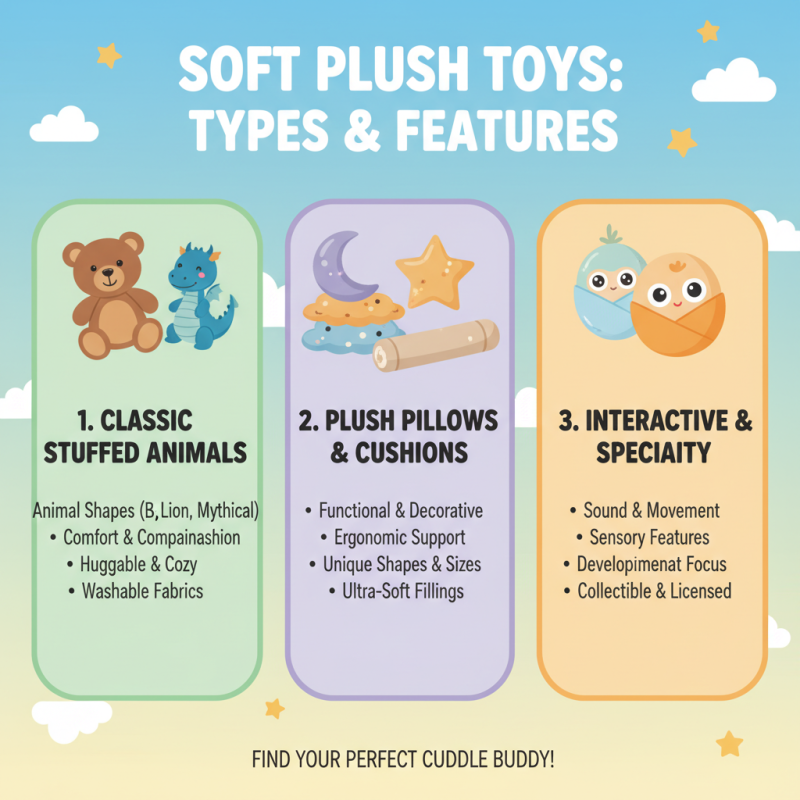
Soft plush toys come in various types, each offering unique features that cater to different preferences and purposes. One popular type is the classic stuffed animal, which often takes the shape of beloved animals like bears, lions, or even mythical creatures. These toys are designed to provide comfort and companionship, making them ideal for children and adults alike. They are typically filled with soft materials, providing a huggable and cozy experience. Many of these plush toys also feature washable fabrics, ensuring they remain clean and appealing over time.
Another intriguing category is character plush toys, often modeled after popular animated figures, cartoons, or even original designs. These toys generally appeal to fans of specific franchises and serve not only as playthings but also as collectibles. Character plush toys are designed with attention to detail to capture the essence of the characters they embody, enhancing the emotional connection fans feel toward them. Additionally, there are plush toys designed for educational purposes, often shaped like letters, numbers, or shapes. These toys combine play with learning, making them perfect for preschool-aged children as they encourage cognitive development while retaining the comfort and softness that plush toys are known for.
Key Benefits of Using Soft Plush Toys for Children and Adults
Soft plush toys have become staples in the lives of both children and adults, serving as comforting companions and decorative items. The American Association of Toy Industry reported that plush toys accounted for nearly 30% of total toy sales in 2022, highlighting their sustained popularity. One of the key benefits of soft plush toys is their ability to provide emotional security. Children often find solace in their plush companions, which can alleviate anxiety and promote a sense of belonging. Furthermore, studies have shown that hugging a soft toy can release oxytocin, the hormone associated with bonding and stress relief, making them beneficial for emotional well-being in all age groups.
For adults, soft plush toys can serve as nostalgia triggers, reminding them of their childhood and providing comfort during stressful times. Research indicates that interacting with plush toys can lower levels of cortisol, the stress hormone, effectively enhancing mental health. Additionally, they often serve as decorative pieces that add a touch of warmth to living spaces.
**Tips:** When choosing a plush toy, consider the size and texture that would appeal most to the recipient, whether it's a child or an adult. Also, ensure that the materials used are safe and hypoallergenic, especially for young children. Regular cleaning and maintenance can also extend the life of plush toys, allowing them to remain cherished companions for years to come.
Tips for Choosing the Right Plush Toy for Different Age Groups
When selecting soft plush toys for different age groups, it’s essential to consider the developmental needs and safety of the child. For infants and toddlers, plush toys should be small, lightweight, and free from small parts that could pose a choking hazard. Soft toys with varied textures and gentle sounds can stimulate sensory development. Opt for materials that are hypoallergenic and machine washable to ensure safety and hygiene, as little ones are prone to putting toys in their mouths.
As children grow, their preferences and needs change significantly. Preschoolers may enjoy plush toys that resemble their favorite characters or animals, fostering imaginative play. At this stage, look for toys that encourage interaction, such as those with detachable parts or those that can double as a pillow. For older children, plush toys can serve as comfort items or collectibles. Choose designs that reflect their interests and hobbies, helping to bolster their emotional connection while also adding a playful element to their personal space.