

How Chinese Porcelain Shaped the Form and Spirit of Thai Ceramics | Cross-Cultural Influence in the Asian Ceramic Industry
Throughout Southeast Asia’s ceramic history, Thai pottery and Chinese porcelain have been closely connected — not only through trade, but also through art, craftsmanship, and philosophy. From the kilns of Sukhothai to the design studios of Chiang Mai, Chinese porcelain has profoundly shaped both the form and spirit of Thai ceramics.
1. The Transmission of “Form”: Craftsmanship and Aesthetic Structure
The “form” of Thai ceramics was strongly influenced by Chinese porcelain during the Song and Yuan dynasties, when porcelain from Jingdezhen and Fujian reached Thailand via the Maritime Silk Road.
Chinese techniques — from wheel-throwing and glazing to kiln temperature control — inspired local artisans in developing unique Thai kiln traditions like Sukhothai ware and Sawankhalok ware.
Today, that legacy continues. Many ceramic tableware suppliers in Thailand and ceramic dinnerware wholesalers in Bangkok still follow the same high-temperature firing and symmetrical shaping principles derived from ancient Chinese craftsmanship.
Modern Thai ceramics often feature:
-
Fine white clay and durable glaze similar to Chinese porcelain,
-
Balanced proportions in bowls and plates,
-
And an elegant yet minimalist aesthetic appealing to both homes and restaurants.
Whether it’s a ceramic kitchenware supplier in Nonthaburi or an OEM ceramic manufacturer in Samut Prakan, the Chinese influence on Thai ceramic “form” remains both visible and vital.
2. The Fusion of “Spirit”: From Craft to Cultural Soul
If the “form” represents visible craftsmanship, the “spirit” (or shen) expresses the invisible soul behind it.
When Chinese porcelain entered Thailand, it carried symbolic motifs — dragons, clouds, lotus flowers — but Thai artisans reinterpreted them through a local spiritual lens.
In Thai Buddhist culture, designs became softer, more organic, and filled with blessings. For example:
-
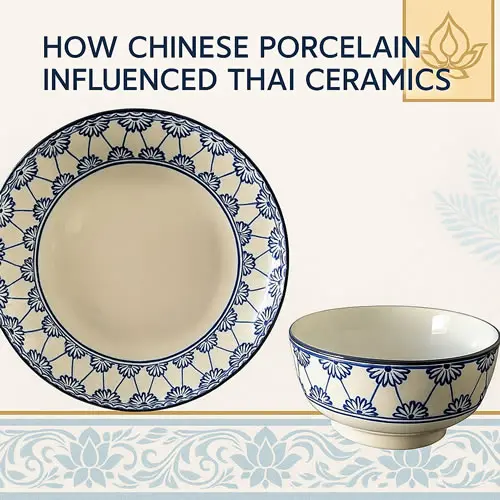
Blue-and-white patterns were adapted to feature Bodhi leaves and mythical birds,
-
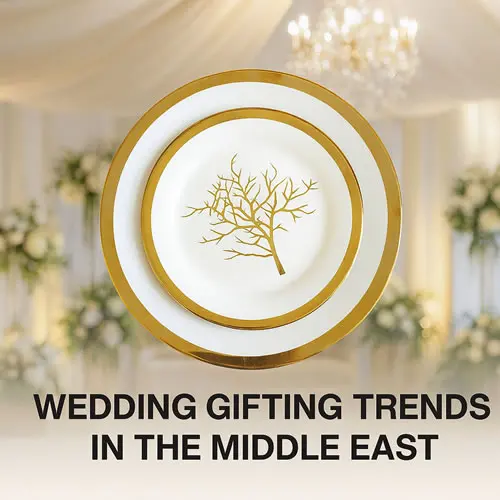
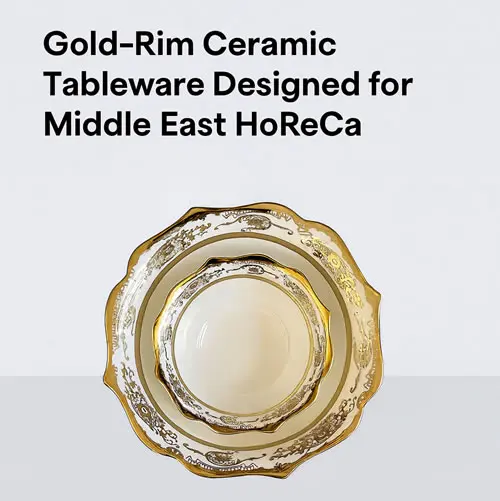
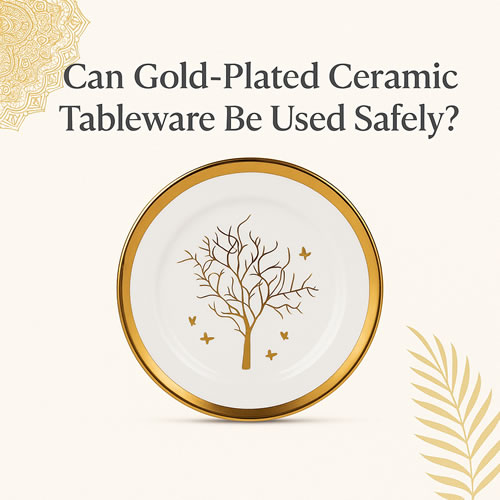
Gold-rimmed ceramics gained ritual meaning for temples and family ceremonies,
-
And glaze decoration evolved to reflect Thai warmth and hospitality.
This transformation created a distinct Thai identity — a harmony of Chinese technique and Thai soul. The result is art that celebrates both refinement and spirituality, making Thai ceramics globally recognized for their “form and spirit in unity.”
3. Modern Resonance: Collaboration and Co-Creation
In today’s ceramic industry, Thailand and China share deep manufacturing and design partnerships. Many ceramic kitchenware distributors in Thailand work with Chinese OEM ceramic factories, introducing new technologies such as eco-friendly glaze, digital decal printing, and lead-free ceramic materials.
Meanwhile, Thai manufacturers integrate these innovations with local creativity — tropical plant motifs, golden temple hues, and contemporary minimalist styles — producing collections that are both modern and culturally rich.
From Bangkok’s household goods wholesalers to Chiang Mai’s handmade pottery studios, Thailand’s ceramic sector has become a dynamic blend of artistry and industry.
It bridges tradition with modern production, allowing Thai ceramics to thrive in export markets while keeping their heritage alive.
🌏 Conclusion: The Porcelain Road of Form and Spirit
The story of Chinese porcelain and Thai ceramics is not just about trade — it’s about cultural dialogue through fire and clay.
From the “form” of craftsmanship to the “spirit” of design, this shared journey has given birth to a lasting legacy in Asia’s ceramic world.
Today, with Thailand emerging as a key hub for ceramic tableware export, ceramic household product distribution, and OEM dinnerware manufacturing, the influence of Chinese porcelain continues to shine — reimagined through the hands of Thai artisans who honor both tradition and innovation.
— Atasi · Southeast Asia Ceramic Culture Observer