China Best Glass Drinkware Suppliers for Global Buyers begins with a practical question: who can deliver consistent quality at scale?
The global glass tableware market continues to attract hospitality, retail, and foodservice buyers. Grand View Research identifies premium design, household consumption, and commercial replacement demand as important growth factors. Its market analysis also highlights Asia-Pacific as a significant manufacturing and consumption region. Forecasts vary between research firms. That difference deserves attention.
Glass Drinkware includes tumblers, stemware, mugs, bottles, carafes, and specialty serving pieces. Each product requires different forming, annealing, decoration, and inspection controls. A low price means little if rims arrive chipped or dimensions vary between cartons. Small details matter.
UN Comtrade provides trade data under HS classifications for glass tableware and kitchenware. Buyers can use these records to compare exporting markets, although classification limits remain. The European Container Glass Federation also reports strong recycling performance for glass packaging in Europe, supporting the material’s circularity credentials. However, drinkware is reusable tableware, not packaging. The distinction is often overlooked.
Reliable sourcing requires more than browsing factory photos. Buyers should examine audit records, production samples, lead times, packaging tests, and corrective-action procedures. ISO 9001 certification can indicate a structured quality system, but it does not guarantee perfect products. Experience still matters.
China offers broad manufacturing capacity, from automated soda-lime glass lines to smaller borosilicate and crystal workshops. Yet supplier selection is rarely simple. A capable factory may not suit every market, design, or order volume. This guide evaluates China’s leading Glass Drinkware suppliers through evidence, manufacturing fit, communication quality, and export reliability. Some conclusions may remain imperfect. That is better than pretending the market is fully transparent.
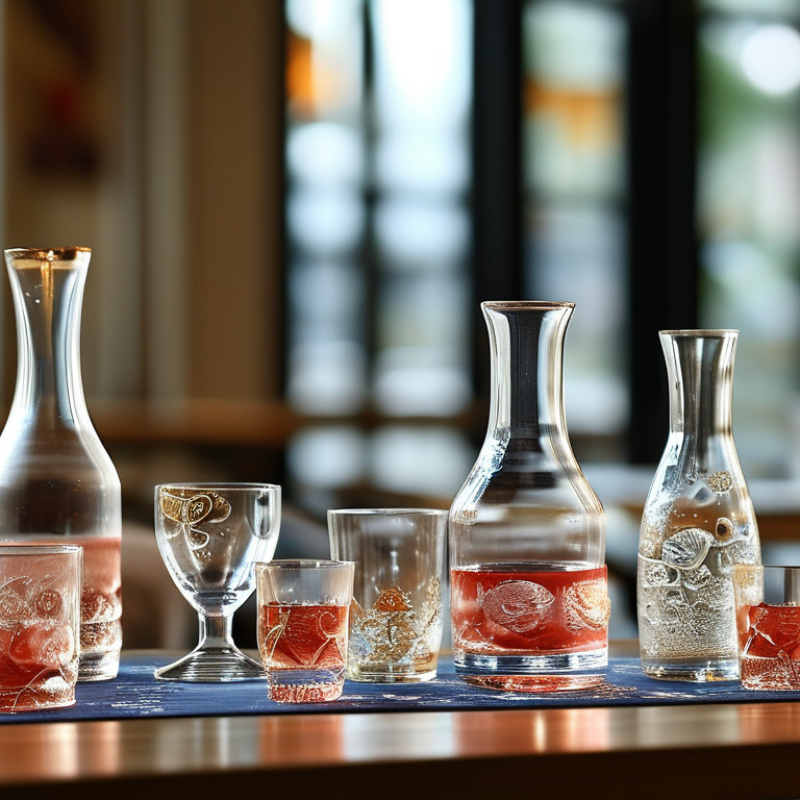
A reliable glass drinkware supplier in China does more than offer attractive catalogs. They control the process from raw material selection to final packing. Experienced buyers should request production samples, not rely on photographs alone. Hold each glass under strong light. Check the rim, base, wall thickness, and surface clarity.
Technical confidence appears in clear records. A dependable supplier can explain glass composition, capacity tolerance, thermal shock performance, and food-contact testing. They should provide batch traceability and inspection reports when requested.
Factory audits also matter. Look for clean production areas, calibrated measuring tools, trained inspectors, and documented corrective actions. Small details reveal working habits.
Communication is another practical test. Reliable teams confirm drawings, color references, carton dimensions, and delivery dates in writing. They report problems before shipment. A weak supplier may promise everything quickly. That is a warning sign. No factory is flawless. Minor visual variations can occur in handmade or colored glass. The important question is whether the supplier defines acceptable limits and manages them consistently. Ask for a pre-shipment inspection, carton drop testing, and photos of packed goods. A trustworthy partner welcomes careful questions, even when they slow the conversation.
China’s glass drinkware supply base covers tumblers, stemware, mugs, carafes, and reusable bottles. Each category needs different inspection priorities. A tumbler should feel balanced in the hand. Stemware needs a straight bowl, even rim, and carefully annealed stem. Carafes require stable bases and reliable sealing surfaces.
The 2024 Grand View Research assessment estimated the global glass tableware market at about USD 10 billion in 2023. Its projected growth reflects demand for durable, reusable serving products. However, market size does not prove supplier quality. Buyers should request batch records, material declarations, and third-party test reports. ISO 7086 addresses lead and cadmium release from glass hollowware. EN 1183 evaluates thermal shock resistance. These standards matter when a cold glass meets hot water.
Quality checks should include rim thickness, capacity tolerance, surface scratches, bubbles, chips, and base flatness.
A practical factory audit also examines furnace temperature logs and annealing controls. The International Organization for Standardization stresses controlled testing conditions, yet real kitchens are less predictable. A glass may pass a laboratory cycle and still fail after repeated dishwasher use. That uncomfortable gap deserves attention. I would not accept “food safe” as a complete specification. The buyer should define temperature ranges, washing cycles, drop-test expectations, and packaging protection before approving samples. Small details matter. A carton corner can decide whether a perfect glass reaches a customer intact.
Choosing Chinese glass drinkware suppliers requires more than comparing unit prices. Global buyers should verify manufacturing experience, export records, and quality controls. Request a current factory profile, production photos, and a video audit. Photos can mislead. Check furnace capacity, forming lines, inspection stations, and storage conditions. A supplier that explains defects clearly often appears more reliable than one promising zero problems.
Order samples made through the same process as mass production. Inspect rim smoothness, wall thickness, capacity, clarity, and base stability. Test cartons by stacking them in a warehouse simulation. Small details matter. Ask for food-contact test reports from an accredited laboratory, plus material and coating declarations where relevant. Confirm whether documents match the exact glass type, decoration, and intended market. Generic certificates deserve questions.
Evaluate communication through a written specification sheet. It should state dimensions, tolerances, packaging, labeling, acceptable defect limits, MOQ, lead time, and replacement terms. Ask how the supplier handles a cracked pallet or late shipment. Their answer reveals operational maturity. A pre-shipment inspection can reduce surprises, but it cannot replace process control. I once underestimated packaging quality because the samples arrived safely; production cartons later needed stronger separators. That mistake changed my checklist. Leave room for revision, and record every agreement before placing the order.
China Best Glass Drinkware Suppliers for Global Buyers
Customization, Packaging, and International Compliance
Choosing a glass drinkware supplier requires more than comparing unit prices. Custom shapes need approved drawings, mold trials, and clear tolerance limits. A 350 ml tumbler may vary after annealing, especially around the rim and base. Practical factory audits should review furnace records, inspection plans, and rejected samples. UN Comtrade data for HS 7013 shows strong international trade in glass tableware, but trade volume does not prove supplier reliability. Samples matter more than impressive catalogs.
Packaging needs equal attention. Corrugated dividers, edge protection, and drop testing can reduce breakage during ocean transport. The International Safe Transit Association recommends performance testing based on the shipping environment. Export cartons should show quantity, handling marks, and batch references. Custom printing also needs color approval. It sounds minor. It is not.
Tips: Ask for a pre-production sample, food-contact test reports, and a packaging test video. Confirm compliance with EU Regulation (EC) No 1935/2004 or applicable US FDA requirements. Request lead-time data from the last three production cycles. Suppliers should also explain traceability from raw glass to final carton. One weakness remains common: buyers sometimes approve appearance without testing repeated washing. That decision can create complaints later. A better process includes thermal-shock checks, dishwasher testing, and random carton inspections before shipment. Good documentation feels slow, but missing records costs more.
| Drinkware Category | Typical Capacity | Common Glass Material | Customization Options | Typical MOQ for Custom Orders | Typical Production Lead Time | Recommended Export Packaging | Common International Compliance Requirements | Documents Buyers Should Request |
|---|---|---|---|---|---|---|---|---|
| Everyday Tumblers | 250–500 ml | Soda-lime glass; tempered versions available | Screen printing, decals, embossing, color coating, rim decoration, custom shapes | 3,000–10,000 pieces, depending on decoration and tooling | 25–45 days after artwork, sample, and order approval | Dividers, protective inner boxes, five-layer export cartons, pallet wrapping | Food-contact material requirements for the destination market; heavy-metal limits for decorations; thermal-shock testing for tempered products | Material declaration, food-contact test report, decoration migration report, packing specification, inspection report |
| Stemmed Wine Glasses | 350–650 ml | Clear soda-lime glass; lead-free crystal-style glass | Stem color, bowl shape, laser engraving, printed artwork, custom gift packaging | 2,000–8,000 pieces for standard shapes; higher quantities may apply to special molds | 30–50 days after final approval | Individual molded pulp or corrugated inserts, compartment cartons, drop-test validation | Food-contact compliance; migration limits for applied decorations; packaging and labeling rules of the destination market | Glass composition statement, migration testing, decoration test results, carton drop-test record, certificate of origin if required |
| Beer Glasses | 330–700 ml | Soda-lime glass; tempered glass for higher impact resistance | Printed graduations, logos supplied by the buyer, embossing, frosted surface, custom base design | 3,000–12,000 pieces for decorated production | 25–45 days after approved pre-production sample | Partitioned cartons, molded pulp separators, moisture-resistant outer cartons | Food-contact requirements; abrasion and dishwasher-resistance testing for printed marks; capacity accuracy where volume marks are used | Capacity calibration record, ink or coating compliance report, dishwasher test report, final inspection report |
| Highball and Cocktail Glasses | 250–600 ml | Soda-lime glass; borosilicate glass for lightweight designs | Fluted or ribbed texture, colored glass, screen printing, embossing, custom geometry | 3,000–10,000 pieces, excluding large tooling programs | 30–50 days after mold and artwork confirmation | Individual sleeves or molded pulp cells, double-wall export cartons, palletized loading | Food-contact compliance; thermal-shock evaluation for hot-and-cold use; coating and pigment migration testing | Food-contact declaration, thermal-shock report, coating safety report, approved sample record |
| Glass Jars and Drinking Jars | 300–1,000 ml | Soda-lime glass; heat-resistant glass for selected designs | Threaded or smooth neck, colored glass, embossed markings, printed artwork, lid and straw configuration | 5,000–20,000 pieces for custom decoration; tooling may require a separate minimum | 35–60 days after tooling approval | Neck protection, compartment dividers, inner cartons, reinforced export cartons | Food-contact compliance for glass, lids, straws, seals, and coatings; leakage and pressure checks where applicable | Component material declarations, leakage test, dimensional report, food-contact test reports, packaging test record |
| Carafes and Water Pitchers | 750–2,000 ml | Soda-lime glass; borosilicate glass for heat-resistant applications | Handle shape, spout design, silicone or metal accessories, printed measurement marks, custom carton | 1,000–5,000 pieces for standard forms; custom tooling may increase the minimum | 35–60 days after engineering approval | Foam or molded pulp protection, separate accessory compartments, reinforced five-layer cartons | Food-contact requirements for all wetted parts; thermal-shock and leakage testing; chemical safety for silicone or polymer parts | Assembly material declaration, leakage test, thermal-shock test, dimensional inspection, packaging specification |
| Borosilicate Tea and Coffee Glassware | 250–500 ml | Borosilicate glass, commonly selected for improved thermal-shock resistance | Double-wall construction, handle design, printed graduations, silicone sleeve, gift-box customization | 2,000–8,000 pieces depending on construction and accessories | 35–60 days after sample and thermal testing | Individual molded pulp or foam inserts, accessory separation, drop-tested gift boxes | Food-contact compliance; thermal-shock testing; leakage and seal testing for double-wall products; accessory compliance | Thermal-shock report, vacuum or seal test where applicable, material declarations, food-contact reports |
| Double-Wall Insulated Glasses | 250–450 ml | Borosilicate glass with sealed air space | Custom wall profile, colored silicone parts, printed artwork, gift packaging, custom insert cards | 2,000–6,000 pieces for standard designs | 40–65 days after tooling, sealing, and sample approval | Individually fitted inserts, moisture-resistant cartons, impact and drop-test verification | Food-contact compliance; thermal-shock resistance; seal integrity; condensation and leakage checks; accessory safety | Seal-integrity test, thermal-shock report, food-contact declaration, accessory test report, final inspection record |
| Reusable Glass Bottles | 350–1,000 ml | Borosilicate or soda-lime glass with compatible cap components | Silicone sleeve, carrying loop, cap color, printed artwork, volume marks, retail packaging | 3,000–10,000 pieces depending on cap and sleeve configuration | 35–60 days after component and leak-test approval | Cap protection, individual sleeves, molded pulp dividers, palletized export cartons | Food-contact compliance for bottle, cap, gasket, and sleeve; leakage, torque, and thermal-shock testing where relevant | Component declarations, leakage test, torque test, migration reports, packaging specification, inspection report |
Buyer planning note: The quantities and lead times shown are typical planning ranges for China-made glass drinkware and can vary according to glass type, mold complexity, decoration method, order volume, seasonal capacity, and accessory requirements. Buyers should confirm applicable food-contact rules, labeling obligations, packaging regulations, and testing methods with an accredited laboratory or qualified compliance specialist in the destination market.
China Best Glass Drinkware Suppliers for Global Buyers
A Step-by-Step Glass Drinkware Sourcing Process
A reliable sourcing process starts with a precise product brief. Define capacity, glass type, dimensions, rim thickness, color, and heat resistance. Add drawings with tolerances. Photos alone can create expensive misunderstandings.
Shortlist suppliers with proven export experience and suitable production equipment. Request factory profiles, quality certificates, material declarations, and recent product samples. Do not judge capability from a polished catalog. Ask how they control bubbles, scratches, uneven walls, and logo placement. One practical lesson is simple: a low quote may hide thinner glass, weaker cartons, or unclear inspection terms.
Order samples before negotiating large volumes. Test stacking, washing, temperature changes, and drop resistance under controlled conditions. Record every result with photographs and measurements. Compare the approved sample against the final production batch. A pre-shipment inspection should check quantity, dimensions, appearance, packaging, and labeling. Include acceptable defect limits in the purchase agreement. Confirm carton strength with a real compression or handling test, not only supplier assurances. I still allow extra time for revisions. Rushed approvals often create avoidable defects. Discuss production schedules, payment milestones, shipping documents, and replacement procedures in writing. Keep one signed sample with the inspection records. That small step can prevent a costly argument later.