China Top Holiday Dinnerware Sets for Global Buyers?
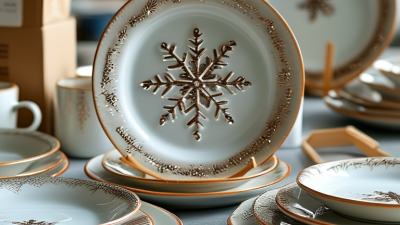
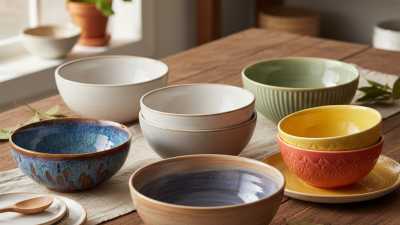
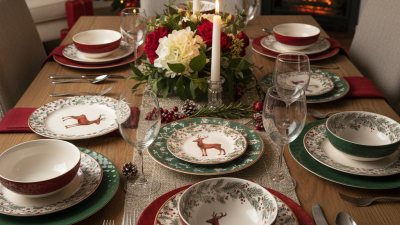
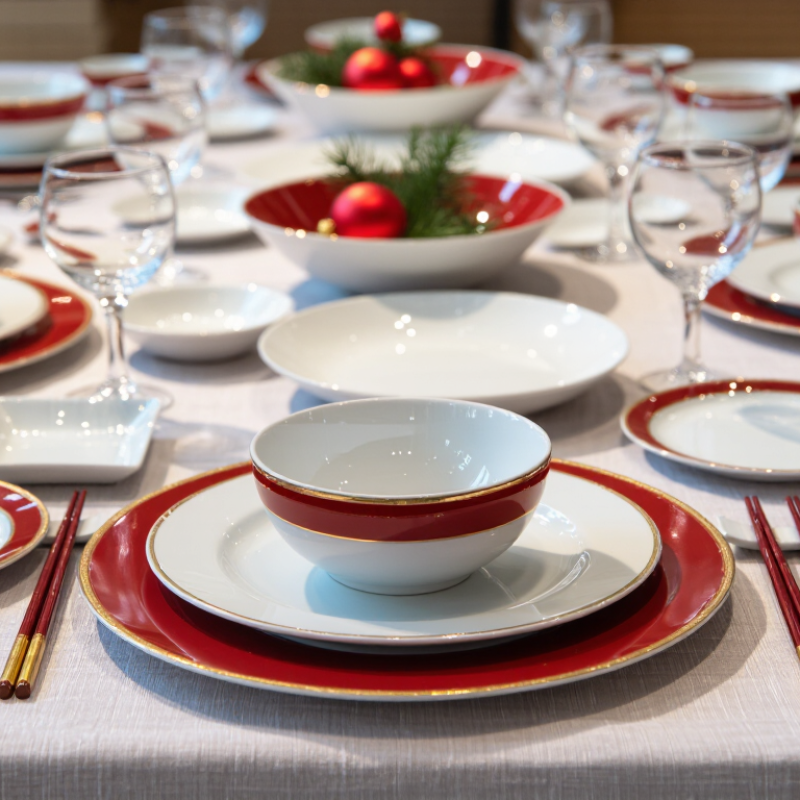
Holiday Dinnerware Sets bring color and ritual to crowded tables, from red-and-gold porcelain bowls to simple white stoneware plates. For global buyers, China offers a wide range of shapes, materials, decoration methods, and order quantities. Yet attractive product photos tell only part of the story. Buyers also need to assess glaze consistency, stacking stability, packaging protection, and sample-to-production differences.
Grand View Research’s Tableware Market report estimates the global tableware market reached USD 42.3 billion in 2023, with projected growth through 2030. This figure covers tableware broadly; it does not measure holiday sets alone. That distinction matters. A growing market is not a guarantee that every seasonal design will sell. Small details matter. A gold rim may look festive, but buyers should check how decoration holds up after repeated use and washing.
Industrial designer Dieter Rams offered a useful design principle: “Good design is as little design as possible.” For holiday dinnerware, that idea can mean choosing festive details without sacrificing everyday usefulness. Global buyers comparing Chinese suppliers should examine material specifications, available samples, customization options, lead times, and carton protection. Request clear product details, then compare them with the delivered sample. It is not glamorous work. It can prevent costly surprises. This guide explores China’s leading Holiday Dinnerware Sets options through a buyer-focused lens, balancing visual appeal with practical sourcing questions. One caution remains: product descriptions and market forecasts cannot replace independent checks of the actual goods.
Classify China-Made Dinnerware Under HS 6911 and HS 6912
Holiday motifs do not determine a dinnerware set’s HS classification. The ceramic body matters. HS 6911 generally covers tableware, kitchenware, and other household or toilet articles made of porcelain or china. HS 6912 generally covers similar ceramic articles made from materials other than porcelain or china.
A glossy white plate is not automatically porcelain. Buyers should request the manufacturer’s material specification and production details, then compare them with the applicable tariff rules. Check the full set: plates, cups, and serving pieces may have different compositions. Decoration, such as painted snowflakes or metallic-looking trim, usually does not change the basic material category, but it can complicate product descriptions. This is easy to misread.
Before shipment, make sure the commercial invoice describes the goods accurately, including their material and intended use. Keep product specifications, clear photographs, and sample records available for review. National tariff schedules may add digits or interpret classifications through local rules, so the six-digit HS heading alone may not settle the final code. Confirm the classification with a qualified customs professional or the importing country’s customs authority. If the supplier’s description is vague, pause and ask for evidence. A rushed guess can create delays.
China-Made Holiday Dinnerware: HS 6911 vs. HS 6912
The chart compares the number of international six-digit subheadings under each heading—not trade volume or tariff rates. HS 6911 covers tableware and similar articles of porcelain or china (6911.10 and 6911.90); HS 6912 covers ceramic tableware and similar articles other than porcelain or china (6912.00). Check the importing country’s tariff schedule for national code extensions and final classification.
Compare Porcelain, Stoneware, and Ceramic Sets by Use and Durability
Porcelain, stoneware, and ceramic dinnerware can look similar in a catalog, but daily handling reveals important differences. Use and firing matter more. Porcelain is usually lighter and less porous when properly made and glazed, making it suitable for formal meals and frequent service. Its thin rims may chip if plates knock together during packing or washing. Stoneware feels heavier and often suits everyday dining, from family meals to busy cafés. Its thicker shape can feel sturdy, though weight adds shipping cost. Neither material is chip-proof.
“Ceramic” is a broad category, not a precise durability grade. Ask suppliers for the body type, glaze details, and test results rather than relying on the label alone. Small differences matter. For global orders, request samples and check rim finish, stacking stability, and packaging protection. A simple drop or transit test can expose weak points before a large shipment. Also confirm whether the set has been tested for dishwasher and microwave use; do not assume every glaze or decoration is suitable. One caveat: a sample may not represent every production batch, so agree on inspection criteria before ordering. Choose for the real use case—lightweight pieces for easy handling, or heavier pieces when a solid feel matters more.
Check ISO 6486-1 Flatware Limits: Lead 0.8 and Cadmium 0.07 mg/dm²
Holiday dinnerware attracts global buyers with rich colors, seasonal patterns, and coordinated place settings. Yet a polished glaze is not proof of safe performance. Buyers should request migration test reports for the exact product, including its glaze, decoration, and intended food-contact surface. Small differences matter. A painted rim may behave differently from a plain plate.
Check the stated lead limit of 0.8 mg/dm² and cadmium limit of 0.07 mg/dm² carefully. Do not assume these are universal ISO 6486-1 limits. ISO 6486 concerns lead and cadmium release from ceramic ware, but the applicable requirements and reporting units depend on the product category and market. Also, “flatware” usually means forks and spoons, while ceramic plates and bowls are dinnerware. Ask the supplier to identify the test method, sample category, extraction conditions, and unit behind each result.
For a practical review, match the report to the shipped item and inspect the decoration around food-contact areas. Keep test records beside purchase specifications. If a certificate lists only a passing result, request the measured values and laboratory details. This takes extra time. It can still prevent costly confusion when holiday stock arrives. One weakness in many buying checks is treating a single report as permanent evidence; changes in colorants or production batches deserve fresh review.
Benchmark Sourcing Context: WTO Puts China at 14.2% of 2023 Goods Exports
China’s 14.2% share of global goods exports in 2023, as reported by the WTO, offers useful context for buyers considering holiday dinnerware sets. It reflects China’s broad role in international trade, not its share of dinnerware exports. That distinction matters. A large export figure cannot confirm a supplier’s quality, capacity, or delivery schedule.
For seasonal orders, compare practical details: glaze consistency, rim finish, set composition, protective packaging, and production lead time. Ask for current samples and inspect them under ordinary indoor lighting. A plate may look smooth in a product photo, yet show uneven color beside another piece. I would not treat national trade statistics as a substitute for checking a specific factory. That can be easy to overlook.
Tips: Request a written packing specification and a sample carton before approving an order. Check how many plates, bowls, and cups fit each set, then verify carton weight and dimensions with your shipping partner. Leave room for production delays. This step is not exciting, but skipping it can make a holiday shipment harder to plan.
Assess Supplier Quality, Packaging, Minimum Orders, and Landed Costs
For holiday dinnerware, inspect a production sample before discussing large orders. Check glaze consistency, rim alignment, and whether plates sit flat on a table. Run pieces through repeated washing if dishwasher use matters to your customers. Ask the supplier for recent inspection records and clear defect criteria. Small details matter. A slightly rough foot ring can scratch a tabletop, even when the piece looks polished in photos.
Packaging needs the same scrutiny as the dinnerware. Request a packed sample and check how each plate is separated, how bowls are secured, and whether cartons resist compression. A simple drop test can reveal weak corners or shifting inserts. Ask for carton dimensions and gross weight; these affect both storage and freight quotes. Packaging changes may improve protection, but they can also raise unit costs. Get revisions confirmed in writing.
Minimum order quantities often differ for standard sets, custom colors, and printed designs. Confirm whether the quoted quantity applies per pattern, per item, or per shipment. For landed-cost estimates, include product price, packaging, freight, insurance, duties, taxes, and destination handling. Use the actual delivery port or address when requesting quotes. Rates can change, and estimates are not guarantees. I’ve seen buyers focus on the lowest unit price, then overlook bulky cartons. That comparison deserves another look.